
A task force born from grief and anger
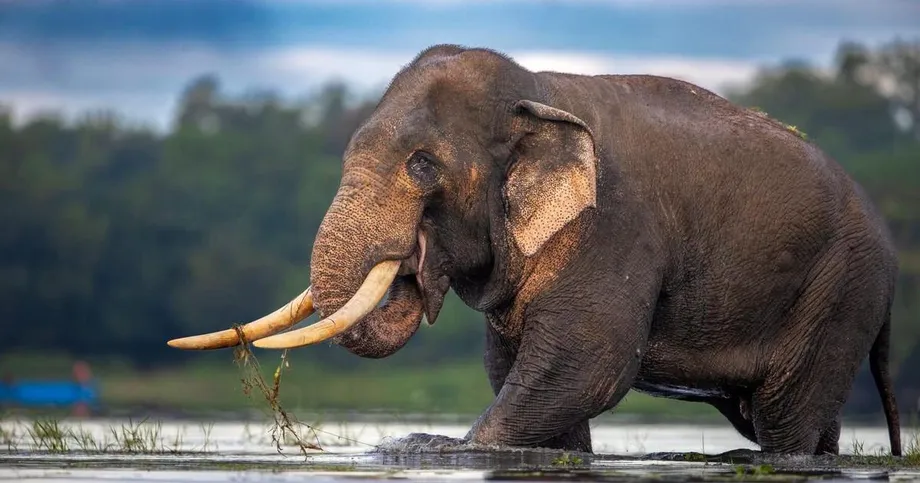
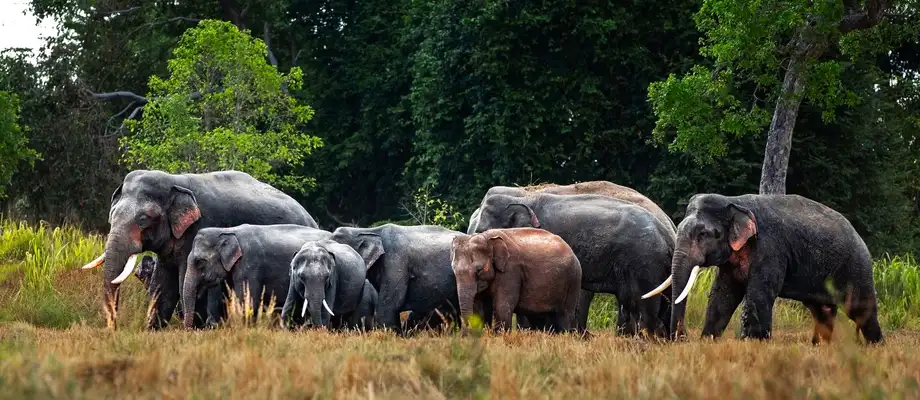
Sri Lanka's response to the killing of Kavantissa, a well known male elephant, has taken the form of a military backed task force called Hasthi Sena, a name that translates as elephant army. The elephant, whose large tusks made him a national symbol, died from a gunshot injury after weeks of illness. His death near Galgamuwa in northwestern Sri Lanka drew protesters to wildlife offices, demands for an independent investigation and sharp criticism of what environmentalists described as a lack of care for an iconic animal.
Inhalt
- A task force born from grief and anger
- What the military operation is doing on the ground
- A second push reaches Gajabahu's range
- Why tuskers draw such strong public feeling
- The numbers behind a national crisis
- How the response unfolded
- Why experts warn against a soldier beside every elephant
- Intelligence, jaw bombs and the hunt for explosives
- A One Health view of the same crisis
- What coexistence measures can do
- Four priorities for a national response
- Key Points
The national effort brings together about 100 personnel from the armed forces, the Department of Wildlife Conservation and the Civil Security Department. Its stated work is to stop further elephant killings, curb wildlife crime and increase surveillance in places where people and elephants meet. Those places are farms, villages, forest edges and irrigation landscapes, not remote reserves where elephants can be watched from a distance.
Officials frame the operation as protection for both sides of a dangerous relationship. Elephants need to survive; rural families need warning, barriers and rapid help when a herd enters a settlement. Kavantissa was shot on October 16 and died on October 30, after the cutoff date for a wildlife count that had already recorded 289 elephant deaths in 2026. More than 300 activists rallied in Kandy the next day, and the issue moved into court as well as into the field.
The Mahawa Magistrate's Court denied bail to Shantha Dharmasiri and Lakmal Padmakumara while investigators sought forensic evidence and an expert review of veterinary treatment. Magistrate Anuruddika Seneviratne ordered reports on firearms and ammunition. Defence lawyer Uday Rajapaksa argued that the case relied on village rumours and asked for an independent body to take over the inquiry. Five other people had also been arrested, bringing the number mentioned during the hearing to seven. The cause of death, the shooter and any harm during treatment remained under investigation; no one had been convicted.
What the military operation is doing on the ground
On November 3, 2026, the Sri Lanka Army said it had set up an Army Operations Room at Army Headquarters. The room coordinates the three armed services with the Ministry of Environment, the Department of Wildlife Conservation and other agencies. It is the command point for a campaign that uses surveillance, intelligence sharing, field operations and legal enforcement against illegal firearms, hakka patas, unauthorised electric fences and snares.
The islandwide operation began on November 2 in the Galgamuwa area. The Army deployed 60 personnel in 10 operational teams under six groups for the first phase. That phase focuses on 17 elephants identified as being at risk, and the plan is to cover about 80 percent of identified jungle areas inhabited by elephants.
Joint teams have already made arrests. In Meekiriyawa and Neeginiyawa, Army personnel worked with wildlife officers and an Air Force Veterinary Surgeon. Three suspects were arrested, and investigators recovered an illegal firearm, trap guns, ammunition, lead pellets, deer antlers, knives made from deer antlers and other items. A separate operation in the Kekirawa area led to the detection of illegal firearms and explosive traps and the arrest of three suspects, including a woman.
By early November, teams had also arrested people linked to illegal wire snares and trap guns. The early results explain why officials want a structure that can respond quickly. A snare can be removed before an animal is injured, while intelligence about supply routes can stop devices from reaching the field.
A second push reaches Gajabahu's range
The Sri Lanka Army announced a separate 18 November operation under Hasthi Sena in the Kebithigollewa, Yan Oya-Wahalkada area, where a tusker named Gajabahu roams. It covered Wahalkada, Issanwewa, Punchimudagama, Galkadawala and Yan Oya Aluth Para. Those villages and tank lands sit inside the kind of inhabited landscape where an elephant can move from cover into crops within a short distance.
The deployment listed 71 Army personnel, including 11 officers and 60 other ranks. The Civil Security Department contributed 30 personnel. The Department of Wildlife Conservation sent Assistant Director Channa Suraveera, three range officers, five range assistants, 13 wildlife guards and four senior assistant officers from the Medawachchiya Wildlife Range Office.
The operation was conducted with formations under Major General Kaminda Silva, commander of the 21 Infantry Division, and Brigadier Nalin Wickramarachchi, commander of the 211 Infantry Brigade. It was implemented with the support of Defence Secretary Air Vice Marshal Sampath Thuyacontha (Retd) and Army Commander Lieutenant General Nilantha Premaratne. The Army said the wider Hasthi Sena operation will continue under the guidance of the Ministry of Environment with full support from the Ministry of Defence.
The stated goals were to protect wild elephants, safeguard human lives and property, and reduce human elephant conflict. That list matters because the same landscape can produce danger for a farmer at night and danger for an elephant during the day.
Why tuskers draw such strong public feeling
A tusker is a male Asian elephant with large tusks. Not every male grows them, which makes each one visually distinct and, for many Sri Lankans, memorable. Kavantissa had become familiar to people around his range, and his death turned a wildlife case into a national grief response.
Research cited in the conservation debate puts the rarity in sharp terms. A 1999 study estimated that only about 7.5 percent of male elephants in Sri Lanka are tuskers. Over the past 10 years, Wild Tuskers Srilanka has documented 300 such elephants. The group recently identified 17 tuskers as being at high risk and needing urgent monitoring, partly because their ranges overlap with human settlements.
Chandika Lakshan, a member of Wild Tuskers Srilanka, said the organisation handed detailed profiles of the 17 animals to government and military officials. Those profiles give the operation something practical to work with: where an elephant moves, which villages sit near its range and where monitoring should be concentrated.
Public support for assigning armed personnel to elephants with large tusks has grown since Kavantissa died. That pressure helps explain the speed of Hasthi Sena, but the science of tusker survival is broader than guarding a single famous animal.
The numbers behind a national crisis
The case of one tusker sits inside a much larger toll. In 2023, 488 elephants and 184 people died in encounters linked to elephants. The following year, about 388 elephants and 155 people died, a fall of 100 elephant deaths and 29 human deaths.
The 455 elephant deaths recorded in 2025 reversed part of that decline, with 160 people killed and 221 injured during the same year. Government figures covering 2015 to 2024 put the toll at 3,477 wild elephants and 1,190 people, an average of about 348 elephants and 119 people a year. Sri Lanka also had 5,787.89 kilometres of electric fencing erected by 2025 and spent 618.89 million Sri Lankan rupees on fence construction during that year.
By October 23, 2026, the 289 elephant deaths recorded since January 1 included 42 from gunshot injuries, 34 from electrocution and 34 from hakka patas. Another 95 deaths had no identified cause. The Eastern Wildlife Region recorded 60 deaths, Anuradhapura 57 and Polonnaruwa 42. Together, those three regions accounted for 159 deaths, or about 55 percent of the national total.
Kavantissa's death came after that October 23 cutoff. The cause breakdown listed 286 animals, three fewer than the headline total, and did not explain the gap or the category labelled English polythene. For communities near elephant ranges, the figures describe both a wildlife loss and a human safety problem.
How the response unfolded
The key dates show a shift from an investigation after a death to a wider security and conservation campaign.
- October 16, 2026: Kavantissa was shot near Galgamuwa.
- October 30: He died at about 6.18 p.m.
- November 2: The islandwide Hasthi Sena operation began in Galgamuwa, focusing first on 17 at risk elephants.
- November 3: The Army described the operations room and early arrests.
- November 6: The count of 289 elephant deaths became a central reference point in public debate.
- November 11: The next court date in the case after two suspects remanded.
- November 18: A special operation began in the Yan Oya-Wahalkada area where Gajabahu roams.
The sequence matters for families near elephant ranges because it puts arrests, monitoring and veterinary capacity on the same timetable as court inquiries and public pressure.
Why experts warn against a soldier beside every elephant
Military visibility reassures the public after a shocking death, but wildlife scientists say the physical layout of Sri Lanka makes a guard for every tusker unrealistic. Elephants here move through farms, settlements and forest fragments. A soldier posted beside one animal would protect one point, while the herd, the crop fields and the routes between them would remain exposed.
Manori Gunawardena, a wildlife scientist at the Environmental Foundation Limited, said conservation has to meet the needs of the herds that produce tuskers. She said young males must survive to adulthood, and that this requires suitable habitat and measures that bring communities into the solution.
We must meet the ecological needs of the herds that produce tuskers, ensuring that male calves and juveniles survive into adulthood if we are truly committed to the future of Sri Lanka's wild tuskers."
"This requires sufficient and suitable habitats and socially inclusive, scientifically informed measures to reduce human-elephant conflict.
Gunawardena also said ivory poaching in Sri Lanka is largely a byproduct of broader human elephant conflict, not the work of organised international syndicates. That changes where enforcement should look. A bullet, a snare or an explosive bait is often rooted in a local encounter over crops, safety or meat, even when the animal killed is a treasured tusker.
Her comparison with African super tuskers is useful because it is so different. African super tuskers can live in vast protected reserves. Sri Lanka's tuskers often live beside dense human settlement and agriculture, so protection has to work across ordinary village land.
Intelligence, jaw bombs and the hunt for explosives
Hemantha Withanage, senior adviser to the Centre for Environmental Justice, said enforcement should put its weight into intelligence gathering rather than stationing a soldier beside every identified tusker. His focus is the supply chain behind the devices that maim animals long before an elephant becomes famous.
Withanage pointed to jaw bombs, also known as hakka patas. Some poachers scatter these balls of food bait packed with explosives to kill wild boars and other animals for meat. An elephant that bites one can suffer catastrophic jaw injuries and a slow death.
Military intelligence, he said, is well placed to trace the people who supply the explosives used in those devices. The arrests announced during Hasthi Sena show the same target from another angle: illegal firearms, trap guns, ammunition, lead pellets and knives made from deer antlers were recovered during joint operations, while explosive traps and illegal firearms were detected in the Kekirawa area.
This is the practical case for a task force. A patrol can find a device. An intelligence unit can follow how the device was made, paid for and moved. A wildlife officer can judge whether an injured animal needs veterinary help. None of those jobs replaces the others.
A One Health view of the same crisis
Udeni Balasuriya, a professor of virology at Louisiana State University's School of Veterinary Medicine and a veterinarian trained in Sri Lanka, frames the elephant crisis as a One Health challenge. One Health is a simple idea with a long name: human health, animal health and ecosystem health are connected, so the institutions that deal with them have to work together. In Sri Lanka, that means linking farmer safety, elephant welfare, forest integrity, rural income and public policy.
Balasuriya points to the recovery of the injured tusker Agbo as an example of cooperation working. Wildlife personnel and the armed forces worked together on that rescue. The lesson is that a response system can combine security, transport, communications, veterinary skill and local access when an animal is hurt or trapped.
He also notes that Sri Lanka has a scientific foundation. The 2020 National Action Plan for the Mitigation of Human-Elephant Conflict was prepared by a presidentially appointed committee chaired by Dr. Prithiviraj Fernando, and an earlier strategy was led by Fernando and Sumith Pilapitiya. It recognises the limits of repeatedly driving or moving elephants and calls for protecting people in the landscapes where elephants actually live.
Balasuriya said emergency care arrives after the conflict has happened. He wrote:
Simply put, veterinarians cannot solve a land-use problem.
That sentence explains the limit of a rescue driven response. A veterinarian can treat a gunshot wound, and an armed team can help reach the animal. Preventing the next injury needs land use choices, safe crops, reliable fences and families who have a role in the system.
What coexistence measures can do
Practical coexistence starts in villages where a family may lose a crop in one night and an elephant may be killed the next morning. Families cannot reasonably be asked to protect a national treasure while absorbing losses without help. Project Orange Elephant, run by the Sri Lanka Wildlife Conservation Society, promotes citrus cultivation using varieties elephants tend to avoid. For participating farmers, the crop can add income while reducing damage to more vulnerable fields.
Beehive fences are another tool being assessed. Bees may deter elephants, and beekeeping can provide honey and extra income. Keeping hives healthy and getting reliable protection can be difficult, so the approach has to be tested locally before it is expanded.
Community managed electric fencing has a stronger record when it protects villages or cultivated fields rather than trying to confine entire elephant populations. Seasonal agricultural fencing can fit elephant movement and cropping patterns. Simple early warning networks using local observers, mobile phone alerts and, where justified, sensors can help families avoid dangerous encounters.
Fences are not a universal answer. Placement, maintenance and community participation decide whether they reduce harm to people and elephants. The 2025 figures on fencing show scale, but scale alone cannot show whether a barrier sits in the right place or whether a farm family can afford to maintain it.
Four priorities for a national response
The first priority is to protect shared landscapes and elephant corridors. Scientific maps of movement routes and seasonal ranges should guide housing, agriculture, irrigation, highways, railways and industry. Major infrastructure should include wildlife crossings and monitoring from the design stage. New settlements in critical corridors should be avoided where possible, with environmental and social assessment before decisions are made.
The second is to strengthen rescue and veterinary care. Regional elephant emergency teams should work under the technical leadership of the Department of Wildlife Conservation and qualified wildlife veterinarians. Trained police and, when needed, armed forces personnel can provide security, transport, communications, equipment and access to difficult terrain. Mobile veterinary units, field equipment, medicines, referral arrangements and clear rescue protocols would make help faster, and new capacity should strengthen existing services rather than create parallel ones.
The third is community empowerment. Families living beside elephant ranges need real roles in warnings, fencing, crop choices and compensation. Wildlife officers and veterinarians also need practical support. For households facing severe and persistent danger, voluntary relocation should follow meaningful consultation, fair compensation, secure housing and livelihood support. Forced or poorly planned displacement would create another welfare problem.
The fourth is accountability through infrastructure and governance. Money, fences, rescue capacity and enforcement results should be published and reviewed. Measures such as citrus buffers, beehive fences and community managed electric fencing should be judged by effectiveness, cost and unintended consequences before national expansion. Hasthi Sena can protect tuskers in the short term. A durable system has to make ordinary landscapes safer for both elephants and people.
Key Points
- Kavantissa's death from a gunshot injury triggered public anger, court scrutiny and demands for an independent investigation.
- Hasthi Sena pairs Army, Civil Security and wildlife personnel in surveillance, arrests and protection work.
- A November 2 phase focuses on 17 at risk elephants and aims to cover about 80 percent of identified elephant jungle areas.
- A November 18 operation covered Gajabahu's range in the Yan Oya-Wahalkada area.
- Experts say guarding every tusker is impractical in Sri Lanka's inhabited farming landscapes.
- Officers recovered firearms, trap guns, ammunition, explosive traps and other items during joint operations.
- Long term protection depends on corridors, rescue capacity, community measures and published results.