
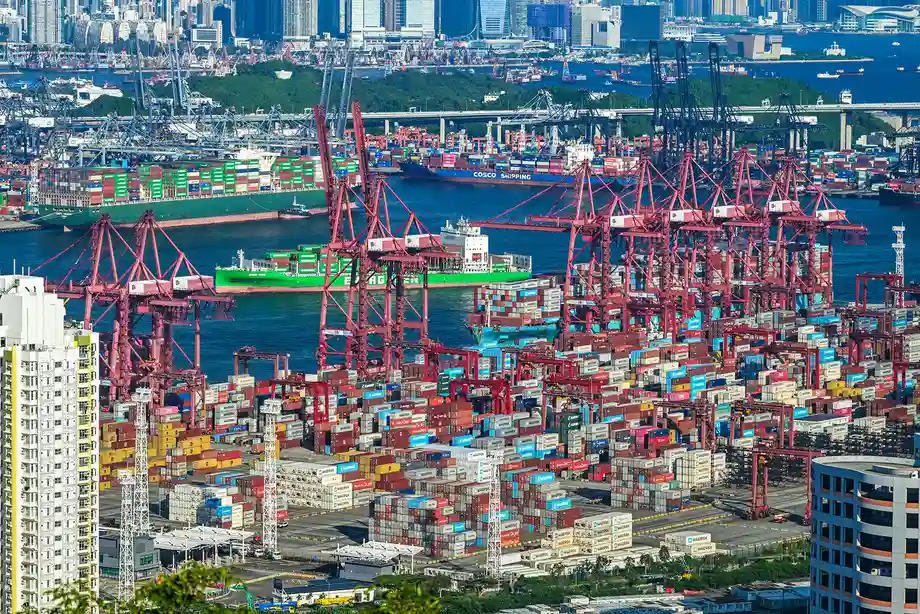
Artificial Intelligence Wave Propels Hong Kong Transport Trade to Record Highs
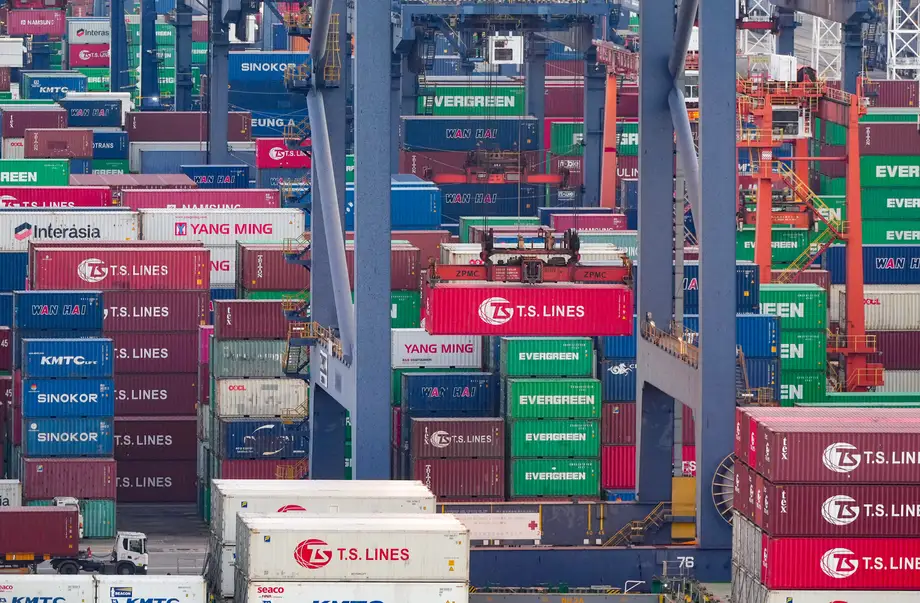
Artificial intelligence hardware demand is transforming global supply chains and lifting Hong Kong into a period of rapid economic expansion. Government figures show that net exports of transport services reached 390.55 billion Hong Kong dollars in the third quarter of 2026, marking the highest single quarter total since quarterly data collection began in 1998. The surge in shipping and logistics stems directly from an 81.4 percent annual jump in artificial intelligence related product exports, which drove total merchandise exports up by 30.3 percent for the same period. Economic output for the third quarter grew 5.2 percent compared with a year earlier, building on a 4.2 percent increase in the second quarter. The strong trade performance pushed the Census and Statistics Department to raise its 2026 economic growth forecast to 4.8 percent on November 13, replacing the earlier range of 3.5 percent to 4.5 percent set in August.
Inhalt
- Artificial Intelligence Wave Propels Hong Kong Transport Trade to Record Highs
- Record September Export Values and the Push for New Global Markets
- Global Supercomputing Competition and Supply Chain Realities
- Advancing Digital Trade and Single Window Infrastructure
- Cross-Border Data Flows and Enterprise Expansion Support
- Enhancing Maritime Logistics and Green Transport Initiatives
- Chronology of Recent Trade and Economic Developments
- At a Glance
Private sector businesses are heavily increasing their investments in physical and digital infrastructure to keep pace with the technology boom. Local fixed capital formation in machinery, equipment and intellectual property products rose 19.82 percent in real terms to 701.94 billion Hong Kong dollars during the third quarter. That investment level represents a twelve year high for single quarter spending and accounts for 60 percent of total private sector fixed capital formation, up 4 percentage points from a year earlier. Standard Chartered senior economist Kelvin Lau Dongan noted that the artificial intelligence wave is also benefiting the local labor market. The unemployment rate for the import and export trade sector fell to 3 percent in October, representing a 0.5 percentage point drop from the same month in 2025. Furthermore, initial public offerings in Hong Kong raised 3884 billion Hong Kong dollars during the first three quarters, with approximately 70 percent of that total coming from companies operating within the artificial intelligence value chain.
Record September Export Values and the Push for New Global Markets
Total merchandise exports reached 7626 billion Hong Kong dollars in September 2026, setting a monthly record spanning more than four decades as global demand for specialized microchips and computing hardware peaked. Commerce and Economic Development Bureau Secretary Algernon Yau Ying-wah emphasized that approximately 90 percent of these exports are re-exports passing through the territory from mainland manufacturing centers. Yau pointed to the historic peace declaration signed by the leaders of China, Russia and the United States at the Asia-Pacific Economic Cooperation meeting in Shenzhen as a positive indicator for future trade stability, while stressing the need for caution and protective trade measures amidst the rapid technology shift.
Algernon Yau explained the strategic importance of expanding trade relationships beyond traditional Western partners during a recent ministerial address.
Many problems are not solved overnight, and many details need to be ironed out, so in Hong Kong we must remain cautiously optimistic and plan our future path. We must do well in our existing directions while planning for the future. Many import and export activities are related to artificial intelligence, but we must closely monitor whether the overall development direction of artificial intelligence will slow down or whether there will be more developments, because 90 percent of Hong Kong exports are re-exports, which has a positive impact on overall employment in Hong Kong. Intermodal transport combining sea, land, and air is very important for logistics, and these must be expanded and strengthened for future development.
Yau outlined specific plans for geographic expansion in the coming year, focusing on Eurasian and African gateways. The government intends to lead delegations of Hong Kong and mainland enterprises into Turkey and Egypt to establish stronger commercial ties. Yau highlighted Turkey as a unique bridge between Europe and Asia, and described Egypt as a primary entrance point into the African market. He also noted that these nations offer strong cultural connections given Hong Kong's growing Islamic tourism sector, which already features more than 200 certified halal eateries. In addition, the commerce chief expressed a strong desire for Hong Kong to join the Regional Comprehensive Economic Partnership as quickly as possible to facilitate international trade and investment flows.
Global Supercomputing Competition and Supply Chain Realities
International technology rivalry continues to shape the operating environment for regional businesses through shifting export controls and infrastructure investments. In New York State, public officials funded the Empire AI supercomputing center project to secure regional computing capacity, reflecting a global trend where governments treat computing power as essential public infrastructure alongside water and electricity. Concurrently, trade monitors reported that Washington authorities approved the cumulative export of nearly 90,000 artificial intelligence microchips to various Chinese firms over a six month period, even as regulators debated mandatory supply chain disclosure rules. This dual approach of controlled commercial access alongside strict oversight creates ongoing uncertainty for corporations relying on stable component supplies.
Mainland technology firms are responding to export restrictions by accelerating domestic substitution efforts across both hardware manufacturing and software development. This domestic push has fostered specialized supply chain divisions and simultaneous growth in cloud computing and edge artificial intelligence technologies. Standard Chartered economist Kelvin Lau Dongan observed that infrastructure investment plans approved during the current year will take two years to fully materialize, meaning technology hardware demand is unlikely to experience sudden disruptions in the near term. Orientis chief economist Gary Ng Kar-khet added that even if trade restrictions alter certain bilateral shipments, rising demand across European and Asian markets will sustain technology export flows moving through regional trade hubs.
Advancing Digital Trade and Single Window Infrastructure
Hong Kong is working to transition its traditional status as a physical shipping hub into a digital trade leader under official planning guidelines. The Census and Statistics Department reported that services accounted for 93.6 percent of local gross domestic product in 2024, with total service exports reaching 8984 billion Hong Kong dollars and generating a trade surplus of 1701 billion Hong Kong dollars in 2025. During the first half of 2026, service exports rose 8.8 percent year-on-year in nominal terms to reach 4782 billion Hong Kong dollars, accompanied by a service trade surplus of 947 billion Hong Kong dollars. Academic estimates from the University of Hong Kong suggest that digital services comprised roughly 43 percent of total service exports in 2023, providing a strong baseline for ongoing expansion into digital delivery.
Government infrastructure projects are steadily modernizing the documentation side of international commerce. The Trade Single Window system launched its first and second operational phases in 2020 and 2023 respectively, covering a total of 42 distinct trade document types. Registration accounts reached approximately 5,700 by October 2024, with users generating more than 275,000 licenses and permits through the digital portal. The first phase achieved an adoption rate of about 90 percent, while the second phase registered a 23 percent utilization rate. The first batch of third phase services rolled out in May 2026, with remaining documentation workflows scheduled for phased releases starting in mid-2027. This digital expansion aims to link customs authorities, banks, and commercial enterprises across a unified electronic framework.
Cross-Border Data Flows and Enterprise Expansion Support
Institutional arrangements are gradually opening new channels for secure commercial and personal information sharing within the regional economy. The Standard Contract for the Cross-Boundary Flow of Personal Information Within the Guangdong-Hong Kong-Macao Greater Bay Area began as a trial in December 2023 before expanding to all industrial sectors in November 2024. Official records showed 153 approved filings by May 2026, covering sensitive operational fields such as banking, insurance, medical services, and credit reporting. Parallel to these data initiatives, a dedicated Mainland Enterprises Development Office established in October 2025 assisted more than 360 mainland corporations in setting up or expanding local operations in Hong Kong through September 2026. Approximately 30 percent of those incoming firms chose Hong Kong to host their international or regional headquarters and corporate treasury centers.
Economic planning frameworks are also encouraging the commercial adoption of advanced computing metrics, including tokens used in artificial intelligence language processing. Policy proposals highlight the need to clarify the legal definitions, pricing mechanisms, statistical categories, and regulatory boundaries for tokenized digital services. By combining professional legal networks, financial services, and streamlined data regulations, policy makers aim to position the territory as a compliant bridge for mainland technology providers seeking international markets. Analysts note that these measures will require consistent statistical standards and integrated data pathways to fully convert physical hardware re-export volumes into high-value digital service exports.
Enhancing Maritime Logistics and Green Transport Initiatives
Transport capacity and environmental sustainability remain central to maintaining Hong Kong's standing as a premier global logistics center. Chief Executive John Lee Ka-chiu addressed industry leaders during the annual logistics and shipping conference on November 17, highlighting that goods exports surged by more than 45 percent during the first three quarters of 2026. Hong Kong International Airport handled over 5 million tons of cargo last year, earning the title of world's busiest air cargo hub for the 15th time since 2010. Infrastructure enhancements, including the ongoing integration of the three-runway system, are currently expanding total flight frequencies and regional cargo handling capacity.
John Lee detailed specific sustainability milestones achieved across maritime and aviation operations during his policy address.
Hong Kong has completed about 220 green marine fuel bunkering operations totaling 380,000 tons last year, including its first green methanol bunkering operation, successfully connecting mainland production with global demand. In aviation, Hong Kong is accelerating the construction of a sustainable aviation fuel supply chain to help airlines reduce emissions, and the Airport Authority Hong Kong has signed memorandums of understanding with Hong Kong and China Gas and EcoCeres, a sustainable aviation fuel producer based in Hong Kong, to establish dedicated facilities to support airlines using sustainable aviation fuel at Hong Kong airport.
The maritime sector is expanding its high-value service offerings alongside traditional container handling. Authorities are partnering with Greater Bay Area counterparts to streamline multimodal transport corridors that link mainland manufacturing zones directly to international shipping routes. Furthermore, regulatory sandboxes are actively testing low-cost delivery drones in real-world environments to establish the territory as an application innovation hub for low-altitude economic activities. These combined infrastructure and environmental upgrades are designed to reinforce the region's competitive edge as global trade patterns continue to evolve.
Chronology of Recent Trade and Economic Developments
The rapid acceleration of trade activity and economic growth over the past year followed a distinct sequence of policy updates and statistical releases:
- August 2026: The government established its initial annual economic growth forecast range between 3.5 percent and 4.5 percent.
- September 2026: Monthly merchandise exports reached 7626 billion Hong Kong dollars, marking a 64.9 percent annual increase driven by artificial intelligence hardware demand.
- October 28, 2026: The Census and Statistics Department published merchandise trade figures showing cumulative export values rising 45.2 percent across the first nine months.
- November 3, 2026: Advance gross domestic product estimates confirmed a 5.2 percent annual economic expansion for the third quarter, pushing nine-month growth to 5.1 percent.
- November 13, 2026: Official revisions upgraded the annual economic growth forecast to 4.8 percent following strong technology export performance.
- November 17, 2026: Chief Executive John Lee announced at a major transport conference that cargo exports rose over 45 percent in the first three quarters while green marine bunkering surpassed 380,000 tons.
At a Glance
- Gross domestic product grew 5.2 percent in the third quarter of 2026 compared with the same period in 2025.
- Net exports of transport services reached 390.55 billion Hong Kong dollars in the third quarter, setting a record since 1998.
- Merchandise exports in September hit 7626 billion Hong Kong dollars, representing the highest monthly total in over 40 years.
- Private sector investment in machinery, equipment and intellectual property rose 19.82 percent to 701.94 billion Hong Kong dollars.
- The annual economic growth forecast for 2026 was upgraded to 4.8 percent on November 13.
- Hong Kong International Airport retained its position as the world's busiest cargo airport after handling over 5 million tons of freight.