

Legislative Initiative Seeks to Create Autonomous Crime of Femicide
Lawmakers from the Frente Revolucionaria do Timor-Leste Independente presented the Palomita Law initiative to the National Parliament on 18 November 2026. The legislative proposal aims to prevent and punish femicide and structural violence against women across the country. Opposition deputy Nurima Ribeiro Alkatiri led the presentation of the draft legislation alongside fellow signatories Cristina Yuri Rebelo, Helena Martins, and Aniceto Longuinhos Guterres Lopes. The measure redefines gender-based killings as an autonomous crime rather than grouping them under standard homicide categories found in existing statutes.
Inhalt
Existing legal provisions under the Penal Code include simple homicide governed by Article 138, which carries prison sentences between eight and 20 years, and aggravated homicide under Article 139, which carries sentences between 12 and 25 years. However, legal experts note that current aggravating factors fail to cover all contexts of intimate partner violence, such as dating relationships where partners do not live together, former partners, or killings stemming from the rejection of romantic advances. The World Bank Women, Business and the Law report from 2024 previously noted that Timor-Leste lacked specific legal provisions targeting femicide.
Triggering Events and Public Outrage in Dili
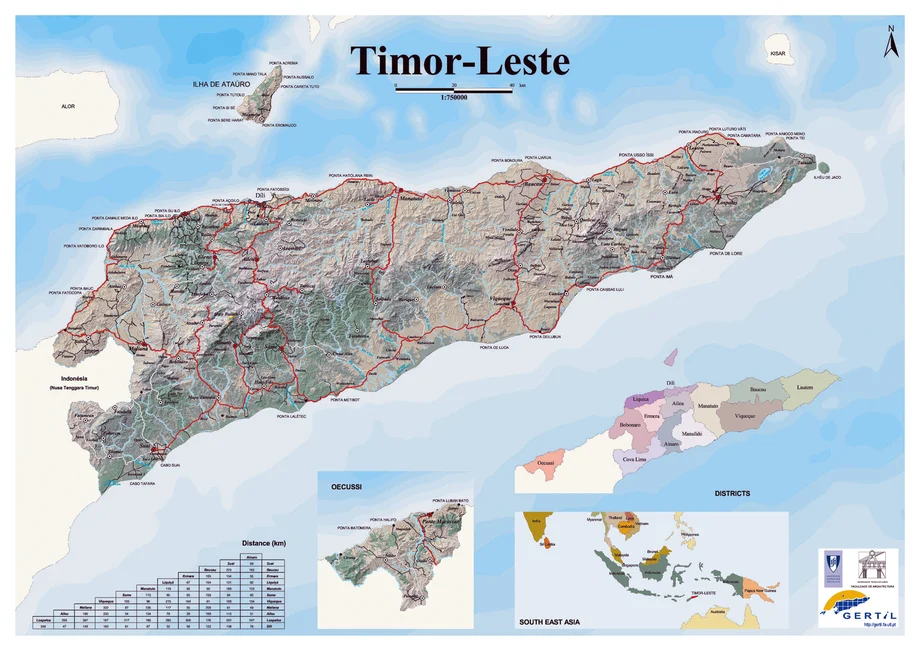
The legislative push directly responds to the aggravated homicide of Palomita Gusmao Guterres, a young student at the Dili Institute of Technology. The victim was stabbed to death on 18 November 2026 in Aldeia 12 Outubru, Tasi-Tolu, Suku Komoro, Postu Administrativu Don Aleixo, in the municipality of Dili. Witnesses reported that the victim cried out for help on the street, but bystanders failed to intervene and some merely filmed the attack. The suspect, identified as her former boyfriend, was subsequently detained by the National Police of Timor-Leste.
This killing follows another fatal incident in March 2026, when a 21-year-old woman was killed at Praia dos Coqueiros in Dili after previously filing formal police complaints and alerting family members about received threats. Civil society groups documented eight murders of women and young girls during the preceding year through local media reports, highlighting a recurring pattern of lethal violence where warning signs were evident beforehand. These events sparked street protests by hundreds of residents demanding stronger state protections for women and girls.
United Nations data from the Committee on the Elimination of Discrimination against Women indicates that more than half of women aged 15 to 49 in Timor-Leste have experienced physical or sexual violence from a male partner. Furthermore, a 2015 study by The Asia Foundation under the Nabilan Program showed that 59 percent of partner-connected Timorese women in that age demographic suffered intimate partner violence during their lifetime, with 47 percent experiencing abuse in the 12 months preceding the study. Court monitoring data from the Judicial System Monitoring Programme showed that gender-based violence made up 76 percent of 745 criminal cases monitored through 2025.
Key Prevention Measures and Educational Strategies
The proposed legislation prioritizes preventative measures through a national strategy implemented across all municipalities. Core educational reforms mandate the teaching of respect, equality, and consent in schools across every municipality. Community-level protections involve establishing support networks for women and children in every suco, which are administrative groupings of villages. The framework also guarantees universal access to mental health services, psychosocial support, and strengthened community policing systems to identify risks before violence escalates.
Mandatory risk assessments form another pillar of the draft law. The legislation requires the National Police of Timor-Leste and the Public Ministry to conduct formal risk evaluations for every reported complaint within a 72-hour window. Additionally, the proposal introduces legal sanctions for individuals who distribute images or videos of assaults on social media platforms. Families of victims are slated to receive comprehensive protection, information access, and financial support provisions designated specifically for orphans of femicide victims.
Penalties, Sentencing Rules, and Budgetary Allocations
The draft legislation establishes prison sentences ranging from 15 to 25 years for convicted offenders, extending up to 30 years in severe cases. To prevent lenient sentencing, the text explicitly prohibits courts from reducing prison terms based on arguments involving jealousy, honor, or traditional agreements, while preserving the constitutional right to the presumption of innocence. The definition of femicide within the proposal covers killings motivated by gender discrimination, the rejection of a relationship, or the assertion of personal autonomy, regardless of whether an affective relationship existed between the victim and the perpetrator.
Funding for these expanded services relies on dedicated allocations within the General State Budget. The proposal mandates the creation of a national data collection system to track incidents accurately and requires the submission of an annual report to the National Parliament. These measures aim to bridge existing gaps identified by international assessments regarding the lack of official government statistics on domestic and dating violence fatalities.
Timeline of Legislative Proceedings
- 18 November 2026: Palomita Gusmao Guterres is killed in Tasi-Tolu, prompting national outrage
- January 2027: Scheduled public hearings led by parliamentary committees involving relevant institutions, women organizations, youth groups, community authorities, and religious representatives
- February 2027: Planned plenary debate and parliamentary review of the draft law
The Bottom Line
- Deputies presented the Palomita Law to establish femicide as an autonomous crime carrying prison terms between 15 and 25 years, and up to 30 years in severe cases.
- The initiative bans the reduction of sentences based on jealousy, honor, or traditional agreements.
- Police and prosecutors must evaluate the risk of every complaint within a 72-hour timeframe.
- Public hearings are slated for January 2027, followed by a parliamentary plenary debate in February 2027.