

Understanding Stroke Trends in Singapore
Stroke cases in Singapore have increased significantly over the past decade, climbing from 6,720 episodes in 2013 to 10,664 episodes in 2023. According to data published in the Singapore Stroke Registry Annual Report 2023 by the National Registry of Diseases Office (NRDO), this upward trend is largely driven by an ageing population. The age-standardised incidence rate, which removes the effect of population ageing to allow for fair comparisons over time, rose by 8% over the decade, moving from 160.3 to 173.4 strokes per 100,000 population. While older individuals remain at the highest risk due to a greater accumulation of cardiovascular risk factors, rates have escalated most rapidly among younger demographics.
Inhalt
A stroke occurs when the blood supply to part of the brain is interrupted or reduced, depriving brain tissue of oxygen and essential nutrients. Carol Tham, a senior consultant at the neurology department of the National Neuroscience Institute, explains that there are two main categories of strokes. Ischaemic strokes, which consistently account for about 80% of all cases annually, happen when a blood vessel supplying the brain becomes blocked. This blockage often results from atherosclerosis, a condition where fatty cholesterol deposits build up inside the walls of blood vessels. Haemorrhagic strokes make up the remaining 20% of cases and occur when a weakened blood vessel ruptures, causing bleeding within the brain.
The Surprising Rise of Strokes in Young Adults
While strokes are predominantly a health concern for older generations, incidence rates among young adults in Singapore have seen alarming increases. Data from the registry show that the age-standardised incidence rate for individuals aged 15 to 29 almost doubled over the decade, rising from 3.9 to 7.4 per 100,000 population. For the 30 to 39 age group, the rate increased by approximately 40%, going from 19.4 to 27.3 per 100,000 population. Medical experts attribute this shift to lifestyle-related factors such as diets high in salt, saturated fats, and processed foods, combined with sedentary habits and insufficient physical activity. These behaviours contribute to early-onset high blood pressure, diabetes, high cholesterol levels, and obesity, all of which are primary risk factors for stroke.
The consequences of a stroke for younger individuals can be exceptionally severe because these patients are frequently the primary financial and physical providers for their families. Carol Tham highlighted the emotional and economic toll of such medical emergencies. Patients in this age bracket face sudden disruptions to their careers and personal lives. As Tham noted,
Patients in the younger age groups are often the breadwinners of their families, and the loss of physical as well as financial independence at a time when their peers are at peak form can be devastating for some.
The disruption often extends beyond the individual, creating long-term caregiving and financial strains for household members who must adapt to sudden health crises.Broader Health Indicators and Chronic Disease Prevalence
Broader population health metrics illustrate the scale of modifiable risk factors present across the country. Findings from the National Population Health Survey 2024, published by the Ministry of Health, indicate that while daily smoking rates have declined to an all-time low of 8.4% and physical activity levels have rebounded to pre-pandemic baselines, chronic conditions remain widespread. Approximately one in three Singapore residents continues to live with hyperlipidaemia or hypertension. Furthermore, the proportion of residents classified as obese with a body mass index of 30.0 or higher increased significantly from 10.5% in the 2019 to 2020 period to 12.7% in the 2023 to 2024 period.
To combat these persistent health challenges, authorities have implemented targeted regulatory measures and preventive programs. The Ministry of Health introduced mandatory Nutri-Grade labelling requirements for beverages to help consumers identify healthier drinks with lower sugar content. Government agencies plan to expand these labelling requirements and advertising prohibitions starting in mid-2027 to cover key contributors of sodium and saturated fat, including prepacked salt, sauces, seasonings, instant noodles, and cooking oil. Additionally, free health and wellness tracking applications like Healthy 365 are utilised by roughly one-quarter of the adult population each month to monitor physical activity goals and encourage active lifestyles through digital incentives.
The Personal Toll: A Story of Early-Onset Stroke
For individuals like Vanessa Ong, a stroke at an exceptionally young age reshaped her life path entirely. In 2008, while studying in Melbourne at the age of 17, Ong suffered a stroke caused by an arteriovenous malformation, which is a rare congenital condition where blood vessels form abnormally and rupture easily. Unlike strokes driven by lifestyle risk factors or chronic conditions like hypertension, congenital vascular anomalies strike without warning and affect otherwise healthy individuals. Her medical emergency left her unable to speak or move the right side of her body. After spending two months hospitalised in Australia, she returned to Singapore and endured more than a year of intensive inpatient and outpatient rehabilitation before she could walk independently again.
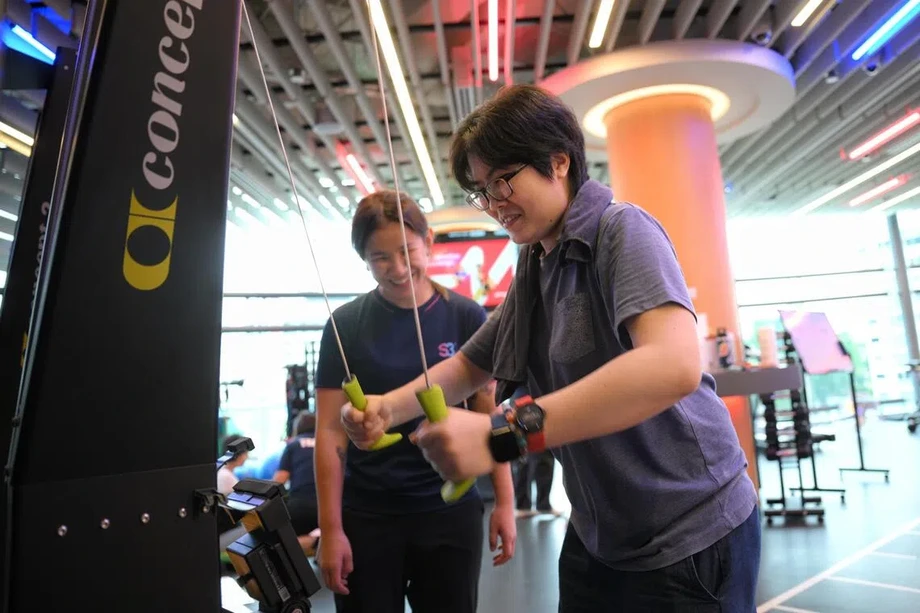
Reintegration into society presented significant hurdles for Ong during her adolescence. She was unable to return to a mainstream school, and local government-funded special education institutions could not accept her at the time. She eventually enrolled in a private special education school to complete her studies and acquire practical vocational skills. Now 35 years old, Ong works part-time at a social enterprise organising donated books and keeping premises tidy, supported heavily by her 75-year-old mother, Tan Siew Eng, who has served as her primary caregiver for nearly two decades. To maintain her physical strength and long-term recovery, Ong visits an adaptive gym at least once a week for targeted cardiovascular exercise and strength training.
Navigating Recovery and Workforce Reintegration
Medical studies underscore the complex gap between surviving a stroke and successfully returning to normal daily routines. Research spearheaded by the National University Health System, published in the Journal of the American Heart Association and detailed in the NUHS-Led Study: 80% Young Stroke Survivors Achieve Good Recovery in Singapore, But Only 60% Return to Work, evaluated 362 local patients aged 18 to 50 admitted between 2020 and 2022. The findings revealed that while 80% to 87.8% of young stroke survivors achieved good functional recovery with little to no lingering disability, only 60% to 68.8% managed to resume employment. Researchers identified large-artery atherosclerosis, diabetes, and high initial stroke severity scores as primary factors hindering vocational reintegration.
Experts note that physical independence does not automatically translate to workplace readiness due to hidden challenges such as cognitive deficits, executive dysfunction, and depressive symptoms. Academic researchers and clinical teams emphasize that professional identities and personal well-being are deeply tied to employment. As Adjunct Assistant Professor Benjamin Tan, a consultant and lead researcher at the National University Hospital, stated,
Work forms a key pillar of patients' well-being, identity, and social participation.
To bridge this gap, public healthcare institutions have established specialized support frameworks, including early discharge rehabilitation programs and vocational clinics designed to screen cognitive health, evaluate mood, and provide job simulations for recovering survivors.Preventive Measures and Warning Sign Recognition
Preventative health strategies remain the most effective tool against the rising tide of cerebrovascular events. Medical professionals advise individuals to eliminate tobacco use, as smoking damages blood vessels and accelerates clot formation. Maintaining a balanced diet low in sodium, saturated fats, and added sugars, alongside engaging in 150 to 300 minutes of moderate-intensity exercise weekly, significantly reduces long-term vulnerability. Routine health screenings are equally vital for the early detection and management of asymptomatic conditions such as high blood pressure and elevated cholesterol before they trigger catastrophic events.
Recognizing stroke symptoms early can mean the difference between full recovery and permanent disability. Healthcare providers urge the public to pay close attention to sudden neurological warning signs, which frequently include facial drooping, sudden weakness or numbness in the limbs, slurred speech, and acute confusion. Michelle Neo, a senior physiotherapist at the Stroke Support Station, stressed that youth does not provide immunity against vascular incidents.
Ultimately, stroke prevention is not solely about lifestyle choices. It is equally important to recognise warning signs early, understand individual risk factors, and seek timely medical attention,
she said. Timely emergency intervention during the initial hours of a stroke can restore blood flow to the brain and dramatically limit long-term neurological damage.At a Glance
- Stroke episodes in Singapore increased from 6,720 in 2013 to 10,664 in 2023, driven primarily by population ageing.
- Age-standardised incidence rates for young adults aged 15 to 29 almost doubled over the decade, rising from 3.9 to 7.4 per 100,000 population.
- Ischaemic strokes accounted for approximately 80% of all cases annually, while haemorrhagic strokes comprised the remaining 20%.
- A multicenter local study revealed that while 80% of young stroke survivors achieved good functional recovery, only 60% successfully returned to work.
- Hypertension and hyperlipidaemia remain the two most common risk factors identified among stroke patients in public healthcare registries.
- Preventive recommendations include quitting smoking, consuming balanced diets, exercising regularly, and attending scheduled health screenings.