
Introduction to Smart Traffic Monitoring in West Java
Travelers heading to the popular mountain resort area of Puncak in West Britain or rather West Java, Indonesia, can now check predicted congestion levels before starting their trips. The Traffic Police Unit of Bogor Regency, known locally as Polres Bogor, launched a public trial for a new website that uses artificial intelligence to forecast vehicle movement up to 12 hours in advance. Artificial intelligence is a branch of computer science where machines are trained to analyze data and make decisions or predictions much like a human expert. The system is designed to help drivers avoid long traffic jams during busy holiday periods such as the upcoming Christmas and New Year celebrations, as well as the Idul Fitri holiday season.
Inhalt
The head of the Bogor Regency Traffic Police Unit, AKP Afif Widhi Ananto, announced the public trial during a statement made on Sunday, November 22, 2026. Speaking at the Hoegeng Police Post in Gadog, Ciawi, Bogor Regency, he explained that the tool is open for everyone to use and test before its official rollout. Drivers and media members can access the platform directly from their web browsers without needing to download any software or applications. The police department wants to ensure the platform works smoothly and gives accurate results before tourist numbers surge during the holiday season.
How the Artificial Intelligence Traffic System Works
The new digital platform relies on a combination of live data collection and advanced computer analysis to track vehicles on the winding mountain roads. The system gathers information from specialized cameras installed at strategic locations along the route, specifically at Tanjakan Selarong and Rest Area 78. These devices are known as traffic counting cameras, and they were provided with the assistance of the national traffic police corps, Korps Lalu Lintas Polri. The cameras automatically count the number of vehicles passing by and record their characteristics, such as whether they are cars, motorcycles, or larger transport vehicles traveling from Jakarta toward Puncak or heading in the opposite direction.
Once the cameras capture the raw numbers, the artificial intelligence software processes the data to recognize patterns in traffic flow. The system compares current vehicle counts against historical data records from the previous 24 hours to understand when roads typically become congested. This data processing allows the computer algorithms to generate forecasts regarding how crowded the route will be over different time intervals. Drivers can look at predictions spanning one hour, three hours, six hours, and even 12 hours into the future, giving them a clear window of time to plan their journeys.
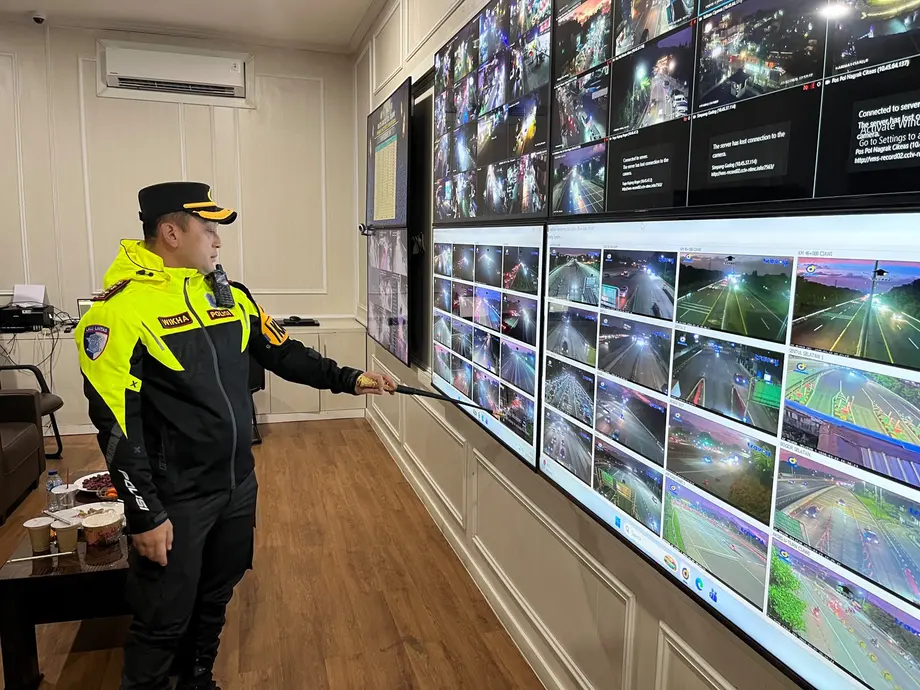
Police officials tested the accuracy of these computer-generated forecasts by comparing them against physical vehicle counts conducted manually by officers on the ground. According to data released by the department, the system achieved a prediction accuracy rate of 91,1 percent during testing, with some operational checks showing figures reaching 95,8 percent. The infrastructure behind this initiative is part of a broader Traffic Management Center development that connects a total of 32 monitoring cameras directly to the central command post at the Hoegeng Police Post in Gadog.
Internal Warning Systems and Public Access
The technology serves two distinct purposes, acting as both an internal management tool for law enforcement and an open information source for the general public. For the police officers stationed in the region, the system functions as an early warning mechanism. Officers can monitor vehicle volumes in real time and receive automated suggestions regarding when to implement traffic engineering strategies, most notably the one-way traffic system. The one-way system temporarily restricts travel in one direction to flush out accumulated traffic, and the artificial intelligence provides mathematical backing to help officers decide the exact timing and duration for these interventions.
For the public, the technology is housed on a dedicated web portal that anyone can visit using a smartphone, tablet, or computer. Visitors can view current road conditions, check active traffic engineering schedules, and watch live camera feeds from the monitoring points along the route. AKP Afif Widhi Ananto explained the reasoning behind making the platform accessible to everyday travelers during his statement at the police post.
So we are here to provide convenience to the public, informing people who want to carry out or plan a trip to vacation in Puncak. So that the public can assess independently and also predict the conditions that exist in Puncak.
Timeline of the Technology Development
The rollout of the smart traffic system followed a careful sequence of planning, equipment installation, and public testing before its official launch date ahead of the holiday season:
- Tuesday, November 17, 2026: Police announced the development of the artificial intelligence traffic management center and detailed the installation of vehicle counting cameras at Selarong and Rest Area 78.
- Wednesday, November 18, 2026: Authorities detailed how the system would assist officers in determining the exact timing for implementing one-way traffic directions based on vehicle volume.
- Sunday, November 22, 2026: The public trial officially opened, and the web address was released for drivers and media to test the platform and view live camera feeds.
- Late 2026 to Early 2027: The system is scheduled for its official public launch ahead of the Christmas and New Year holidays, with ongoing preparations extending toward the Idul Fitri holiday rush in 2027.
What the New System Changes for Travelers
For decades, visitors driving from Jakarta and surrounding cities toward the mountain attractions of Puncak had few ways to check road conditions before getting stuck in heavy gridlock. Previous updates regarding road closures and one-way schedules were distributed primarily through social media channels managed by the local traffic police unit, which often left drivers uninformed until they were already trapped in queues. The introduction of the web-based forecasting tool shifts the control into the hands of the travelers, allowing them to adjust their departure times or choose alternative dates based on reliable statistical projections.
The website is designed to handle high volumes of simultaneous visitors without crashing, ensuring that families planning weekend trips or holiday excursions can check the status of the road even during peak usage hours. Police authorities continue to evaluate performance metrics and refine the algorithms during the trial phase to ensure the forecasts remain dependable as traffic volumes increase. While the technology cannot physically widen the mountain roads, it provides a data-driven layer of organization that helps smooth out the peaks and valleys of holiday travel congestion.
At a Glance
- Bogor Regency Traffic Police launched a public trial for an artificial intelligence traffic prediction website for the Puncak mountain route.
- The platform can forecast traffic conditions and congestion levels one hour, three hours, six hours, and 12 hours into the future.
- System predictions achieved an accuracy rate of 91,1 percent during testing by comparing computer models against physical vehicle counts.
- Travelers can access the service through web browsers on any device without needing to download a separate mobile application.
- The technology also helps police officers determine the precise timing for implementing one-way traffic systems using data from specialized roadside cameras.