
Timeline Adjusts as Board Reviews New Strategy
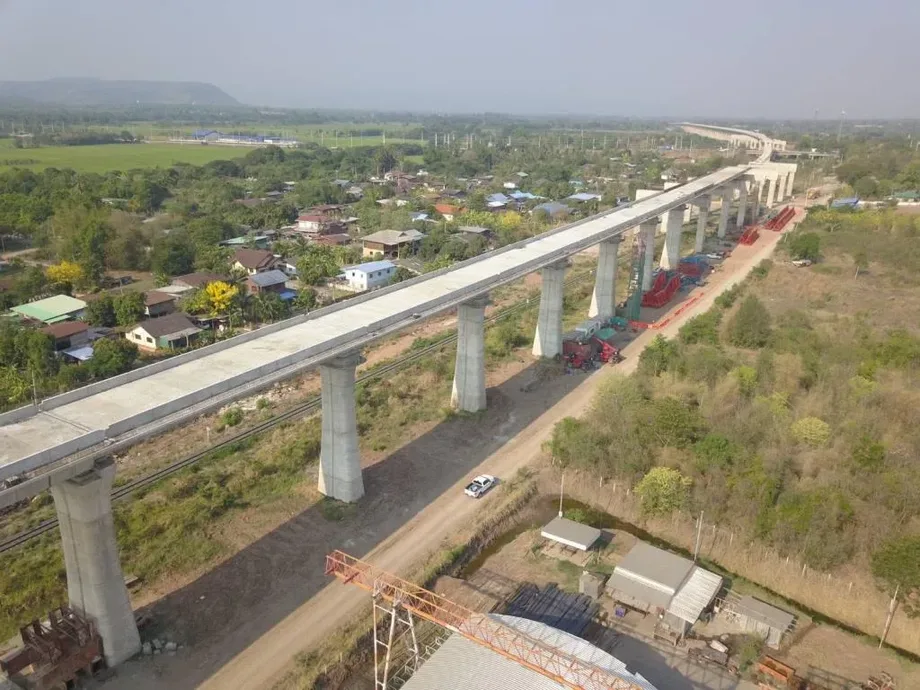
Thailand is adjusting the schedule for its ambitious high-speed rail project that will eventually connect Bangkok to China through Laos. State Railway of Thailand officials met on November 18, 2026, to review the ongoing construction timeline and discuss a long-term private partnership proposal. The railway initiative aims to bridge mainland Southeast Asia and southern China, creating a massive transit corridor across difficult terrain that has historically slowed regional trade. Construction has faced repeated delays since its formal inception in 2014 and the start of physical work in December 2017. Officials now target the mid-2030s for full operations, reflecting updated construction realities on the ground.
Inhalt
During a meeting of the State Railway of Thailand board, leaders evaluated a comprehensive study regarding a public-private partnership model for the entire corridor. State Railway of Thailand Governor Anant Phonimdaeng outlined the decisions made during the session, which was chaired by Transport Ministry Permanent Secretary Piyapong Jiwatnakulpaisarn. The board chose not to approve the private partnership report immediately, instructing railway planners to refine construction schedules and revenue forecasts. The updated plan seeks to align private operation contracts with actual progress on civil engineering works across both phases of the project.
Phase One Progress and Unresolved Contracts
The first phase of the network stretches 250.77 kilometers from Bangkok to Nakhon Ratchasima with an allocated budget of 179.4 billion baht. Civil engineering works for this initial section reached 58.301 percent completion by late October 2026, trailing behind an original schedule that targeted 92.168 percent. Out of 14 total civil contracts for the first phase, two remain unstarted and require fresh procurement steps. Railway authorities plan to handle these remaining segments through new bidding processes to ensure contractors are in place by 2028.
Contract 4-1 covers a 15.21-kilometer stretch between Bang Sue and Don Mueang with a previous budget framework of 22,000 billion baht. This section shares physical infrastructure with another high-speed initiative known as the high-speed rail connecting three airports, which links Don Mueang, Suvarnabhumi, and U-Tapao airports. Railway administrators decided to pull this segment back for direct state management to navigate complex design standards borrowed from Chinese engineering specifications. Meanwhile, Contract 4-5 covers a 13.30-kilometer section between Ban Pho and Phra Kaeo that runs near the historic city of Ayutthaya. Planners previously cancelled bidding for this segment due to heritage protection concerns regarding the nearby UNESCO World Heritage Site. Consultants are currently conducting archaeological test drilling to establish accurate work volumes before issuing new procurement documents.
Financing and Private Partnership Structures
Under the evaluated public-private partnership structure known as a modified gross cost model, the government retains ownership of the infrastructure and collects fare revenue while absorbing business risks. Private operators will manage systems installation, train operations, and ongoing maintenance under a 42-year contract spanning two years of setup and 40 years of service. Financial projections indicate a 5.35 percent return on investment for the state and a 6.39 percent return for the private partner, with full capital recovery expected after 25 years and 10 months. Private sector capital expenditure is valued at 79.805 billion baht, covering system installations and additional rolling stock to expand the active fleet.
The private investment package includes 31.630 billion baht for first-phase technical systems, 30.300 billion baht for second-phase signaling and electrical setups, and 17.875 billion baht to procure 19 extra train sets. These additions will expand the total operational fleet from an initial six trains to 25 train sets across the entire corridor. Ticket pricing studies propose a base fare of 120 baht, with distance-based rates set at 2.29 baht per kilometer for journeys under 300 kilometers and 1.98 baht per kilometer for longer distances. Estimated end-to-end travel costs position the high-speed service as more expensive than driving a personal car but cheaper than flying.
Extending the Line Toward the Lao Border
The second phase of the railway will extend 357.12 kilometers from Nakhon Ratchasima north to Nong Khai province at the border with Laos, supported by a budget of 341.4 billion baht. The Thai Cabinet previously approved this continuation, and officials are currently preparing bidding documents for civil works. A critical component of this northern extension involves building a dedicated railway bridge across the Mekong River to connect with the railway network in neighboring Laos. This new bridge will span 735 meters and accommodate both meter-gauge and standard-gauge tracks across four separate lanes, with an estimated construction cost of 3,000 million baht shared equally between Thailand and Laos.
Discussions are underway with railway authorities in Laos to ensure seamless integration with the Vientiane Logistics Park. The cross-border connection ties directly into the wider regional strategy linked with China's Belt and Road Initiative, which saw the opening of the neighboring China-Laos Railway. When fully operational, passengers and freight will move smoothly from Bangkok through Laos into China's extensive high-speed rail grid, reaching destinations such as Kunming. Thai leaders view this transnational connection as a vital step in cementing the country's status as a primary logistics and transport hub for mainland Southeast Asia.
Project Timeline and Operational Milestones
Construction milestones have shifted repeatedly over the years due to land expropriation challenges, utility relocations, and the global health crisis. Current projections from railway administrators place the completion of civil engineering works for the first phase in 2030, with system testing scheduled to follow. Full commercial service for the Bangkok to Nakhon Ratchasima segment is now anticipated by the middle of 2035. Government leaders have urged transportation ministries to expedite remaining procurement steps to avoid further slippage in the overarching national infrastructure plan.
- February 4, 2025: Thai Cabinet approves the second phase extending the railway to Nong Khai.
- November 18, 2026: State Railway of Thailand board reviews and returns the public-private partnership study for revision.
- Early 2027: Expected timeline to conclude bidding preparations for unstarted civil contracts.
- 2030: Target window for completing civil construction across the initial phases.
- Mid-2035: Projected launch of commercial passenger services on the first phase.
The Bottom Line
- The State Railway of Thailand board postponed approval of the private partnership study, requesting updated construction timelines and financial forecasts.
- Civil works for the first phase between Bangkok and Nakhon Ratchasima are over halfway complete, though delayed behind original targets.
- Private sector participation involves a 42-year contract valued at nearly 80 billion baht for systems, signaling, and fleet expansion.
- Projected ticket prices range from 695 baht for regional trips up to 1,415 baht for the full journey to Nong Khai.
- The completed corridor will connect Thailand's rail network to China through a new Mekong River bridge and the railway system in Laos.