

Unlocking a New Era for Travel
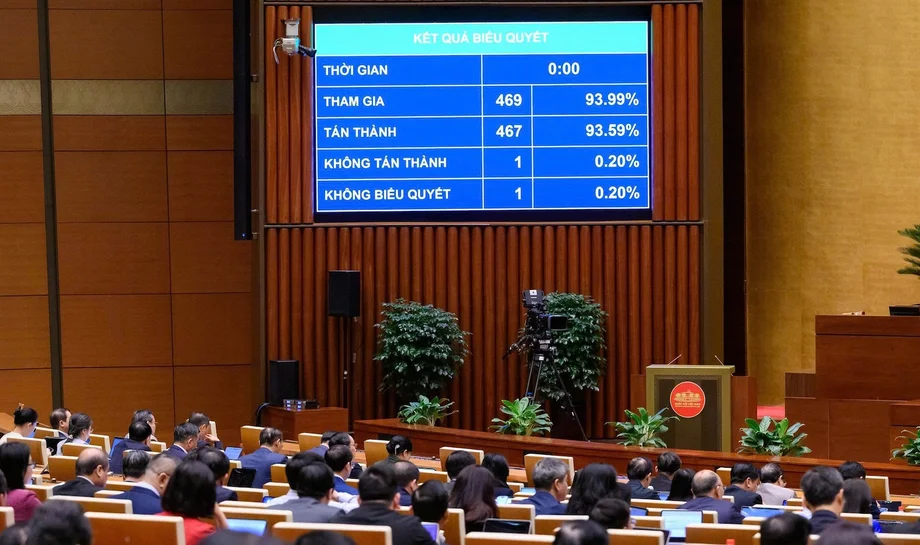
Vietnam took a decisive legislative step on November 21, 2026, when the National Assembly voted to pass a major regulatory framework aimed at reshaping the national economy. During the second session of the sixteenth mandate in Hanoi, lawmakers considered a sweeping package of rules designed to eliminate institutional roadblocks and channel investment into high-value tourism. Exactly 468 out of 480 participating deputies voted in favor of the measure, representing an approval rate of 93.79 percent. The newly enacted legislative package, officially titled Nghị quyết số 59/2026/QH16, consists of 14 distinct articles and takes effect on January 1, 2027, remaining operational through December 31, 2036. The policy arrives as part of a broader national push following last year's attacks on economic resilience, aligning with the strategic socioeconomic goals set for 2026 to 2030 to build deep domestic capabilities across critical industries.
Inhalt
Minister of Culture, Sports and Tourism Lâm Thị Phương Thanh presented the foundational details to the assembly, emphasizing that the legislative updates aim to tie financial incentives directly to verifiable economic contributions. Officials structured the rules to move the country away from a reliance on sheer visitor volume toward sustainable, high-spending tourism that benefits local communities and preserves natural resources. The framework builds directly upon foundational directives established under earlier high-level political decisions, specifically translating the core tenets of the ministry's report on national tourism targets into binding legal mandates.
Tiered Investment Incentives and Strategic Projects
Lawmakers categorized tourism initiatives into four distinct tiers to ensure that government support matches the scale and ambition of each undertaking. Small and medium projects focus on ecological, agricultural, and community-based models, while high-quality ventures must meet rigorous performance criteria. Specifically, high-quality tourism projects require a minimum total investment of 3,000 billion dong, with at least 1,500 billion dong dedicated directly to tourism infrastructure and facilities. These projects must also provide permanent employment for a minimum of 1,000 workers, of whom at least 20 percent must be local residents. Dynamic tourism projects must reach an investment threshold of 10,000 billion dong, with 5,000 billion dong allocated to tourism components and jobs for at least 1,500 people. At the highest level, strategic dynamic projects demand a capital investment of at least 30,000 billion dong, with 15,000 billion dong assigned to tourism assets, creating permanent jobs for at least 2,000 workers while expanding regional supply chains and connecting infrastructure.
Minister of Culture, Sports and Tourism Lâm Thị Phương Thanh outlined the operational boundaries of this tiered system during the legislative debates, explaining how accountability is enforced across the board. Speaking on the structured approach to state backing, Minister of Culture, Sports and Tourism Lâm Thị Phương Thanh stated: "Dự án chất lượng cao thì được hỗ trợ; dự án động lực được ưu đãi thuế, tiền thuê đất; dự án động lực mang tính chiến lược được ưu đãi cao nhất; thu hồi ưu đãi khi nhà đầu tư không thực hiện đúng cam kết."
To attract these substantial commitments, the resolution introduces temporary tax and land concessions that run for a five-year pilot window. Dynamic projects qualify for a preferential corporate income tax rate of 10 percent for five years on income generated from tourism components, alongside land rental reductions. Strategic dynamic projects enjoy the most generous concessions, including operating terms of up to 70 years for tourism facilities, corporate income tax exemptions for up to four years, and a 50 percent reduction in tax obligations for the following nine years. Projects sited entirely within economically disadvantaged or exceptionally disadvantaged regions benefit from reduced capital and labor thresholds to encourage regional balance.
Permitting Around the Clock Entertainment and New Models
Nighttime economies and modern entertainment complexes receive legal authorization to operate continuously under controlled testing parameters. Large-scale art performance complexes, concert halls, festival streets, and comprehensive entertainment centers gain approval to experiment with 24-hour daily operations for a maximum trial period of three years. Provincial people committees draft specific operational proposals for legislative review, and large complexes located within sensitive security or defense zones require advance approval from the Prime Minister. International artistic programs and major periodic events benefit from streamlined administrative procedures, requiring only a single reviewing authority and a one-time licensing evaluation.
New business models spanning digital platforms, the sharing economy, riverside and coastal commerce, and wellness tourism also receive formal recognition and tax encouragement. Qualifying enterprises applying artificial intelligence, virtual reality, or augmented reality technologies enjoy a two-year corporate income tax exemption followed by a 50 percent reduction for the next four years. Additionally, four-star and luxury resort hotels with a gross building density of under 25 percent can test a land rent reduction of up to 30 percent over five years for unbuilt green spaces, water features, and common areas.
Decentralization and Synchronized Legal Reforms
Parallel legislative updates adopted on the same morning demonstrate a sweeping move toward administrative decentralization across cultural and administrative sectors. Under the leadership of National Assembly Chairman Trần Thanh Mẫn and the direction of Vice Chairman of the National Assembly Nguyễn Thị Thanh, lawmakers passed a comprehensive law amending seven foundational statutes. The legislative update passed with an overwhelming 99.79 percent approval rate, with 476 out of 477 participating deputies voting in favor. The revised rules transfer specific decision-making powers from central ministries down to local authorities to eliminate administrative bottlenecks.
Authority regarding the organization of international athletic championships shifts from the Prime Minister to the Minister of Culture, Sports and Tourism. Similarly, the power to recognize and revoke official tourist destination statuses moves from provincial people committees to local specialized tourism departments. The Minister of Culture, Sports and Tourism assumes responsibility for designating national tourist zones spanning multiple provinces, replacing the previous requirement for prime ministerial approval. Furthermore, decentralized management extends to cultural heritage preservation, empowering local leaders to approve projects related to UNESCO documentary heritage inventories.
Infrastructure and Regional Growth Priorities
State budget allocations prioritize essential public infrastructure, multi-modal transport corridors, and smart destination management systems linking international gateways to national tourist hubs. National funding supports the National Tourism Promotion Program, directing targeted grants toward community tourism initiatives in mountainous, border, island, and ethnic minority regions. Provincial councils hold the authority to subsidize airlines and travel agencies that establish new flight routes or restore suspended services connecting travelers to local destinations. Businesses maintaining long-term purchasing contracts for local agricultural goods under the One Commune One Product initiative also qualify for regional financial backing.
Human resource development remains a core pillar, with state funds underwriting specialized training programs covering digital transformation, digital content creation, foreign languages, and professional hospitality management. Local councils retain the flexibility to craft incentive packages designed to retain skilled workers and encourage tourism enterprises to hire local labor directly. These measures complement parallel national updates, mirroring the financial rules seen in the ministry's report on strategic technology funding which mandate strict spending floors and measurable performance outcomes for state-backed initiatives.
Summary of Legislative Milestones
- National Assembly adoption: November 21, 2026, during the second session of the sixteenth mandate, passing with 468 out of 480 votes (93.79 percent).
- Core legal instrument: Resolution No. 59/2026/QH16 consisting of 14 articles governing special tourism development mechanisms.
- Implementation window: Effective from January 1, 2027, through December 31, 2036, featuring a five-year investment incentive pilot and a three-year trial for new business models.
- Complementary legislative action: Passage of amendments to seven foundational cultural and tourism laws with 476 out of 477 votes, taking effect on March 1, 2027.
- Investment tiers: Classification of projects into small and medium, high-quality, dynamic, and strategic dynamic tiers with capital thresholds ranging from 3,000 billion dong to 30,000 billion dong.
At a Glance
- Tax concessions: Dynamic projects receive a 10 percent corporate tax rate for five years, while strategic projects secure up to four years of tax exemption and a 50 percent reduction for nine subsequent years.
- Nighttime operations: Music centers, festival streets, and large entertainment complexes can pilot 24/7 operating schedules for a maximum duration of three years under provincial oversight.
- Visa framework: Expansion of bilateral visa waivers for high-spending target markets and controlled testing of long-term digital nomad and medical recovery residence permits.
- Administrative reform: Decentralization of tourism site recognition and heritage project approvals from central government bodies to provincial departments and local authorities.
The Bottom Line
The newly approved statutory framework establishes a long-term roadmap designed to elevate Vietnam into a premier international destination by rewarding substantive investments and sustainable practices. By aligning fiscal incentives with strict performance metrics, decentralized management, and innovative lifestyle offerings, the legislation empowers local economies to harness cultural assets while meeting modern global traveler expectations.