
National Assembly Convenes Historic Legislative Session
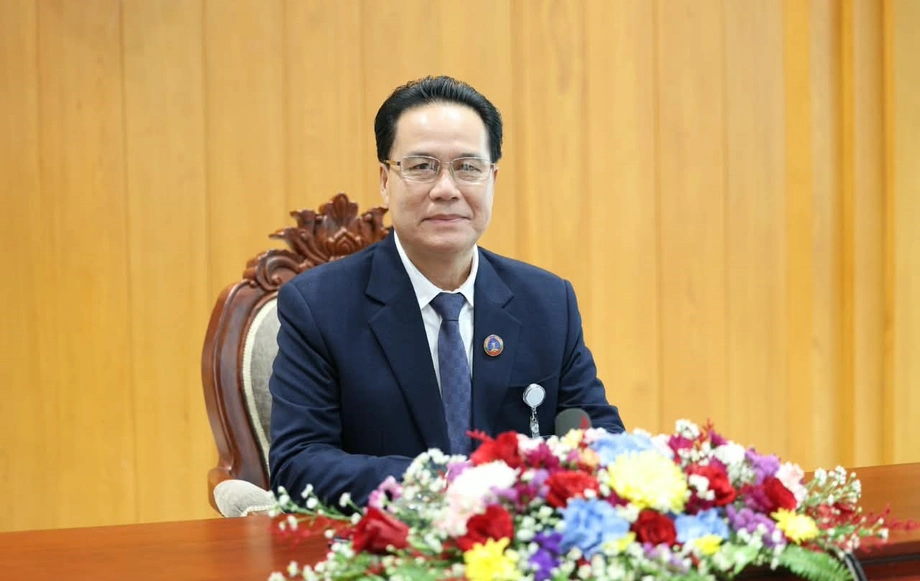
Lawmakers in Laos gathered for a major legislative meeting that resulted in the successful approval of eight distinct legal texts. The proceedings took place at the National Assembly, bringing together representatives from across the country to vote on crucial measures affecting the economy, public safety, and governance. Dr. Kongkeo Xaysongkham, Vice President of the National Assembly and head of the Law and Judiciary Committee, announced the voting outcomes during a press briefing.
Inhalt
- National Assembly Convenes Historic Legislative Session
- Introducing the New Deposit Protection Law
- Revising Military and Public Security Regulations
- Controlling Alcohol Consumption and Transport Rules
- Strengthening Government Operations and Cybersecurity
- Broader Resolutions and Strategic Planning
- Chronology of the Legislative Session
- Next Steps for National Legislation
- At a Glance
The legislative gathering began on October 5, 2026, and entered its intensive lawmaking phase on October 13, 2026. Members of the National Assembly reviewed proposals presented by various government ministries before casting their votes. The finalized texts include one completely new statute and seven major revisions to existing laws, reflecting an ongoing effort to update the legal framework of the nation.
Introducing the New Deposit Protection Law
Among the approved measures, the creation of a deposit protection framework stands out as a completely new addition to the legal system. The proposal was introduced by the Deputy Governor of the Bank of the Lao PDR to establish security for people saving money in financial institutions. A total of 163 delegates participated in the vote for this specific statute.
The new financial regulation received strong backing from the assembly members. Lawmakers cast 157 favorable votes, accounting for 96.31 percent of the total participation. Meanwhile, six delegates voted against the measure, representing 3.68 percent of the voting body, with no abstentions recorded.
Revising Military and Public Security Regulations
Lawmakers also tackled vital updates to the laws governing the armed forces and internal security personnel. The revised law concerning officers in the Lao People Army was presented by the Deputy Minister of Defense. Out of 161 attending delegates, 157 voted in favor, which equals 97.51 percent, while three voted against and one abstained.
Security measures received even higher levels of agreement during the voting process. The revised law on the Lao People Public Security forces was introduced by the Deputy Minister of Public Security. Among 165 attending delegates, 164 voted in favor, reaching a 99.39 percent approval rate, with only a single opposing vote.
Controlling Alcohol Consumption and Transport Rules
Public health and infrastructure regulations underwent significant scrutiny during the parliamentary debates. The revised law on controlling alcoholic beverages was presented by the Deputy Minister of Health. This particular measure sparked more discussion than others, drawing 166 participating delegates where 151 voted in favor, translating to 90.69 percent, while 14 delegates opposed it and one abstained.
Infrastructure and travel rules received broad support from the assembly. The Minister of Public Works and Transport presented both the revised civil aviation law and the revised road traffic law. For the civil aviation update, 164 delegates participated, resulting in 160 favorable votes, or 97.56 percent, alongside two opposing votes and two abstentions. The road traffic update yielded identical numbers, securing 160 favorable votes out of 164 total participants.
Strengthening Government Operations and Cybersecurity
Governance and digital safety formed another core component of the legislative agenda. The revised law on the government was presented by the Deputy Minister and Deputy Head of the Prime Minister Office. Out of 164 attending delegates, 161 voted in favor, representing 98.17 percent of the assembly, with two opposing votes and one abstention.
Digital protection also received high priority from the government. The Minister of Technology and Communications presented the revised law on anti-cybercrime and cyber-security. This measure achieved 161 favorable votes out of 164 participating delegates, accounting for 98.71 percent, alongside two opposing votes and one abstention.
Broader Resolutions and Strategic Planning
In addition to the eight laws, the assembly addressed wider national governance and development plans. Vice President of the National Assembly and Head of the Secretariat of the session, Mr. Bounchan Sivongphan, detailed the approval of 17 separate resolutions during the meeting. These resolutions covered economic strategies, state budget execution, and monetary planning for the upcoming year.
Delegates reviewed reports from key oversight bodies, including the State Audit Organization and the State Inspection Authority. High approval ratings marked these broader votes, with the socio-economic development plan for 2026 securing 99.39 percent favorable votes. Unanimous votes also confirmed the election of the top leadership roles within the national government structure.
Chronology of the Legislative Session
Parliamentary work followed a structured timeline to ensure thorough review and discussion of every document. The assembly scheduled key milestones leading up to the final announcements:
- October 5, 2026: The ordinary session of the National Assembly opened.
- October 13, 2026: Lawmakers began intensive reviews and debates on the eight proposed laws.
- October 20, 2026: Responsible committees reported on revisions and provided clarifications before final voting.
- October 21, 2026: Assembly leaders formally announced the voting results and resolutions to the public.
Next Steps for National Legislation
Passing the laws through parliamentary votes marks a major milestone, but administrative processes must conclude before enactment. The Law and Judiciary Committee will coordinate with relevant parliamentary bodies and drafting committees to finalize the wording of each statute. These finalized texts will then go to the President of the State for the issuance of an official presidential decree.
Government officials have urged ministries, local authorities, state enterprises, and private companies to study the new regulations thoroughly. Spreading awareness across all levels of society helps ensure that the legal framework transforms into everyday practice. The measures aim to protect the rights of individuals, organizations, and the broader public while strengthening the rule of law across the country.
At a Glance
- Eight laws were considered by the National Assembly, comprising one new statute and seven revisions.
- The deposit protection law passed with 96.31 percent of the vote.
- Civil aviation and road traffic revisions both secured 97.56 percent favorable votes.
- Seventeen total resolutions were adopted during the parliamentary session with approval ratings exceeding 90 percent.
- Finalized legal texts will be promulgated following the issuance of a presidential decree.